Plants with Red, Purple or Black Leaves

PLANTING SOLUTIONS

Plants with Red or Purple Leaves

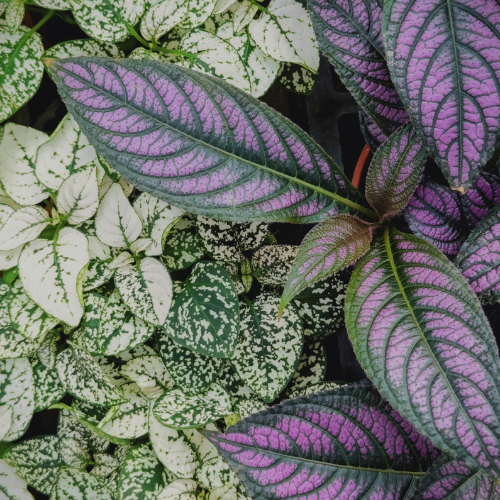
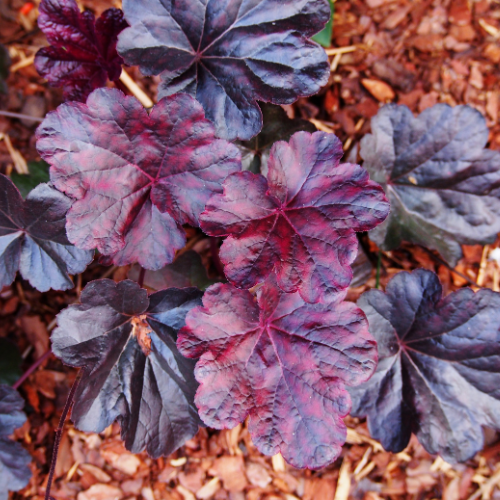
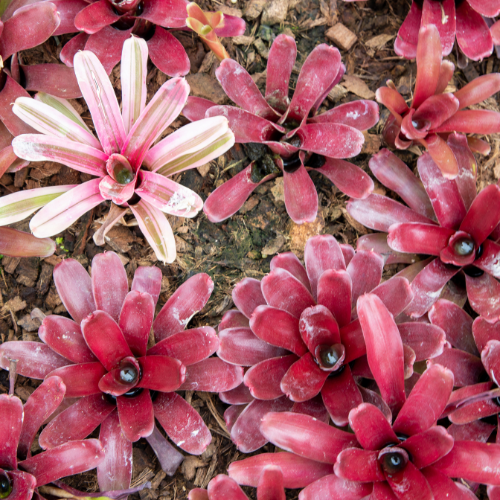
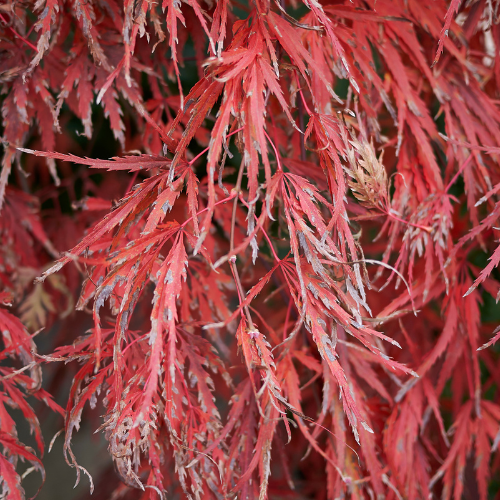
Purple, red and black foliaged plants stand out from the masses, they’re unusual and not the everyday norm. Being of a darker hue they always make excellent background subjects for mass plantings with paler shades in the foreground. Use them sparingly to avoid creating a dark overtone to the garden or landscape. Great for adding impact and contrast to mixed borders and plantings, including pots.


Most red foliage requires full sun in order to maintain colour intensity. Some indoor plants grow in lower light intensities whilst retaining the darker pigmentation. Many succulents have leaves that turn red in winter due to the weather conditions.


Below is a list of plants for KwaZulu-Natal gardens – both cold, temperate climates and warm sub-tropical regions. Check on climatic preferences before making any final selections.  Their botanical name is listed first with common names in (brackets).

Annuals and Perennials

(Low Growing)

Key:  (B) = bulb (C) = climber (D) = deciduous (E) = evergreen (F) = fruit (H) = herb (I) = indigenous (N) = nectar rich (S) = seed (T) = thorns  


  • Ajuga reptans ‘Black Scallop’ 
    (carpet bugle) (ED)
  • Ajuga reptans ‘Chocolate Chip’ 
    (carpet bugle) (ED)
  • Alternanthera bettzickiana 
    (calico plant) (E)
  • Alternanthera brasiliana ‘Purple Prince’ 
    (purple calico plant) (E)
  • Amaranthus tricolor 
    (Joseph’s coat) (E) (A)
  • Begonia hybrida ‘Big Bronze Leaf’ series 
    (bushy begonia) (E)
  • Begonia rex Hybrids 
    (rex begonia) (E) – Note: many begonia types have dark foliage
  • Begonia semperflorens hybrids 
    (bedding begonia) (E) (A)
  • Bromeliad: x Cryptbergia rubra 
    (ground cover bromeliad) (E)
  • Bromeliad: Neoregelia ‘Fireball’ 
    (bromeliad) (E) – Note: many bromeliads have dark leaves
  • Calathea rufibarba 
    (velvet calathea) (E)
  • Canna hybrida ‘Black Knight’ 
    (canna) (D)
  • Capsicum annuum ‘Black Pearl’ 
    (ornamental pepper) (E) – Note: a number of capsicum hybrids have dark foliage
  • Celosia cristata ‘Dracula’ 
    (cock’s comb) (E) (A)
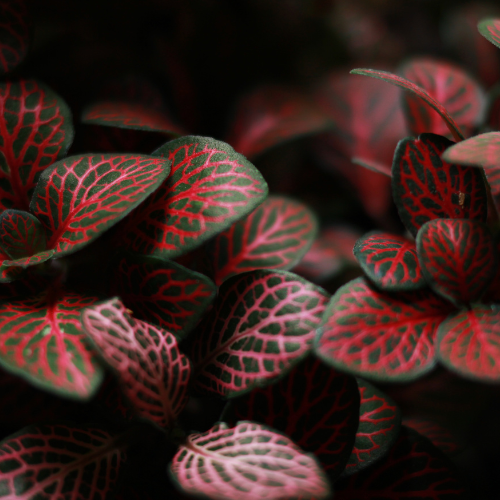
  • Fittonia albinevis ‘Red Form’ 
    (mosaic or nerve plant) (E)
  • Heuchera ‘Obsidian’ 
    (coral bells) (E) – Note: many types of heuchera have red or dark foliage
  • Impatiens hawkeri Hybrids 
    (New Guinea impatiens) (E)
  • Ipomoea batatas ‘Sweet Caroline Black’ 
    (ornamental sweet potato) (D)
  • Lobelia cardinalis ‘Vulcan Red’ 
    (scarlet lobelia) (D)
  • Lysimachia ‘Midnight Sun’ 
    (dark leaves lysimachia) (E)
  • Ocimum basilicum ‘Dark Lady’ 
    (purple basil) (E)
  • Ocimum ‘Herbalea Wild Magic’ 
    (purple basil) (E)
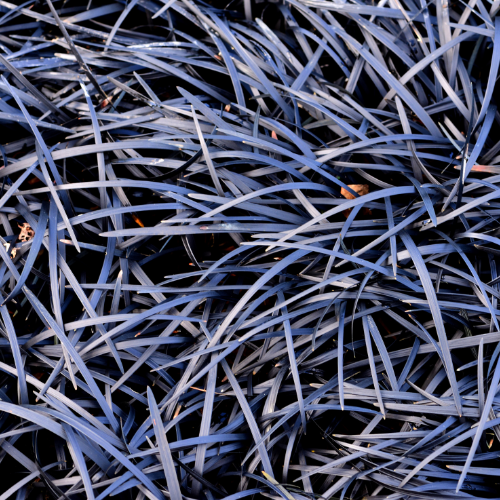
  • Ophiopogon planiscapus ‘Nigrescens’ 
    (black mondo grass) (E)
  • Pelargonium Pelgardini ‘Occold Shield’ 
    (brown leaved geranium) (E)
  • Pelargonium Pelgardini ‘Vancouver Centennial’ 
    (colourful leaved geranium) (E)
  • Pennisetum ‘Vertigo’ 
    (giant purple grass) (D)
  • Pennisetum setaceum ‘Rubrum’ 
    (purple fountain grass) (D)
  • Salvia officinalis ‘Purpurescens’ 
    (purple leaf sage) (E)
  • Solenostemon scutellarioides Hybrids 
    (coleus or Joseph’s coat) (E) – Note: many different types of coleus have red purple or black leaves
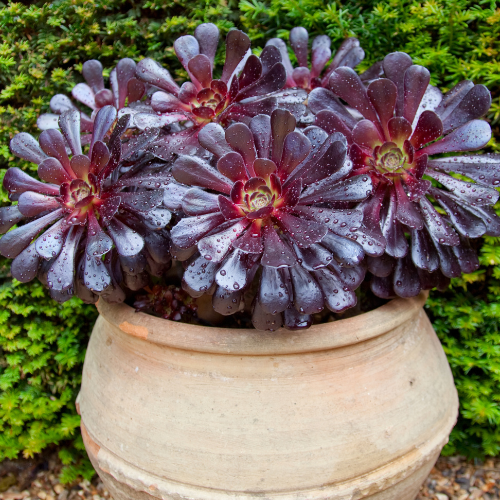
  • Succulent: Aeonium arboretum ‘Zwartkop’ 
    (black velevet rose) (E)
  • Succulent: Crassula ovata ‘Red Edge’ 
    (red edge jade plant) (E) (I)
  • Succulent: Crassula capitella ‘Campfire’ 
    (red leaf crassula) (E) (I)
  • Succulent: Crassula streyii 
    (purple-leaved fairy crassula) (E) (I)
  • Succulent: Echeveria hybrida ‘Blue Curls’ 
    (giant rock rose) (E) – Note: some echeveria types turn red or pink in winter
  • Succulent: Echeveria purpusorum 
    (dark rock rose) (E)
  • Succulent: Echeveria shaviana affinis ‘Black Prince’ 
    (black rock rose) (E)
  • Succulent: Kalanchoe sexangularis 
    (red kalanchoe) (E) (I)
  • Succulent: Kalanchoe thyrsiflora 
    (paddle plant) (E) (I)
  • Succulent: Sedum adolphii ‘Firestorm’ 
    (red leaf golden sedum) (E)
  • Succulent: Sedum x rubrotinctum 
    (jellybean plant) (E)

Shrubs & Climbers

(Medium to Tall Growing)

Key:  (B) = bulb (C) = climber (D) = deciduous (E) = evergreen (F) = fruit (H) = herb (I) = indigenous (N) = nectar rich (S) = seed (T) = thorns  


  • Acalypha wilkesiana ‘Nigra’ 
    (copperleaf) (E) – Note: many acalypha hybrids have dark leaves
  • Acer palmatum ‘Dissectum Crimson Queen’ 
    (cut leaf Japanese maple) (D)
  • Berberis thunbergii ‘Atropurpurea Nana’ 
    (dwarf barberry) (D)
  • Berberis thunbergii ‘Atropurpurea Rosy Glow’ 
    (pink leaf barberry) (D)
  • Codiaeum variegatum select hybrids 
    (croton) (E) – Note: many different crotons have red leaves
  • Clerodendrum quadriloculare 
    (quezonla) (E)
  • Coprosma repens ‘Pacific Night’ 
    (purple mirror bush) (E)
  • Cordyline banksii ‘Electric Pink’ 
    (pink leaf cabbage tree) (E)
  • Cordyline banksii ‘Red Fountain’ 
    (dwarf cabbage tree) (E)
  • Cordyline terminalis ‘Red Edge’ 
    (ti tree) (E) – Note: many different ti trees have coloured leaves
  • Euphorbia cotinifolia 
    (red leaf euphorbia) (D)
  • Hebe ‘Amy’ 
    (veronica) (E)
  • Iresine herbstii 
    (bloodleaf) (E)
  • Leptospermum scoparium ‘Cherry Brandy’ 
    (dwarf tea bush) (E)
  • Leucadendron ‘Burgundy Sunset’ 
    (dark leaved conebush) (E) (I)
  • Leucadendron ‘Purple Haze’ 
    (purple leaved conebush) (E) (I)
  • Leucadendron ‘Red Devil’ 
    (red conebush) (E) (I)
  • Loropetalum chinense ‘Rubrum’ 
    (Chinese fringe bush) (E)
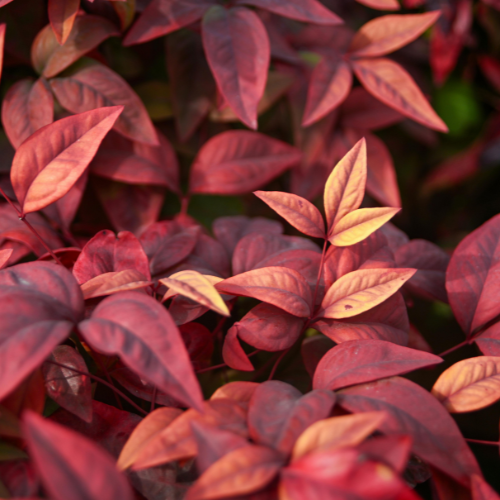
  • Nandina domestica ‘Obsession’ 
    (Japanese sacred bamboo) (E)
  • Phormium ‘Amazing Red’ 
    (New Zealand flax) (E)
  • Phormium tenax ‘Rubrum’ 
    (New Zealand flax) (E)
  • Physocarpus opulifolius ‘Little Devil’ 
    (nine bark) (D)
  • Pseuderanthemum reticulatum ‘Atropurpureum’ 
    (purple false eranthemum) (E)
  • Strobilanthes anisophyllus 
    (goldfussia) (E)
  • Strobilanthes dyerianus 
    (purple Persian shield) (E)
  • Synadenium grantii 
    (African milk bush) (D)
  • Vitex trifoliata ‘Purpurea’ 
    (Arabian lilac) (E)
  • Weigela florida ‘Sparkling Fantasy’ 
    (purple weigela) (D)
  • Yucca aloifolia ‘Purpurea’ 
    (purple Spanish bayonet) (E)

Trees

(Tall Growing)

Key:  (B) = bulb (C) = climber (D) = deciduous (E) = evergreen (F) = fruit (H) = herb (I) = indigenous (N) = nectar rich (S) = seed (T) = thorns  


  • Acer palmatum ‘Bloodgood’ 
    (Japanese maple) (D)
  • Cordyline australis ‘Red Seansation’ 
    (New Zealand cabbage tree) (E)
  • Dodonaea viscosa ‘Purpurea’ 
    (purple sand olive) (E)
  • Malus floribunda ‘Purpurea’ 
    (purple crab apple) (D)
  • Prunus cerasifera ‘Nigra’ 
    (flowering plum) (D)

Disclaimer:

Whilst every care and caution has been taken in compiling these lists in terms of correctness and accuracy, Blackwood’s, nor any of their employees can be held liable or responsible if any of the recommendations are found to be incorrect in any way whatsoever. They are merely a guide to help gardeners and staff in finding solutions to gardening problems. All plants listed may not be available for sale at times. They do however all grow in the greater KwaZulu-Natal area and are to be found growing successfully in local gardens.