Plants that Attract Bees

PLANTING SOLUTIONS

Plants that Attracts Bees to the Garden

Bees are extremely important pollination insects in the production of food crops. So much so, that it’s mooted that if bees were to become extinct, mankind would starve to death in a matter of years. Attracting bees to gardens has become a popular aspect of modern-day horticulture with “bee friendly” pesticides available on the market. Growing flowering plants that provide pollen for bees plays an important role in maintaining viable bee populations in suburban areas. This includes numerous solitary bee species which do not live in hives nor form swarms. Bee friendly gardens must always have clean water accessible for visitors.


Below are just a few of the more common garden plants that can be grown for this purpose in KwaZulu-Natal.  Their botanical name is listed first with common names in (brackets).

Annuals and Perennials

(Low Growing)

Key:  (B) = bulb (C) = climber (D) = deciduous (E) = evergreen (F) = fruit (H) = herb (I) = indigenous (N) = nectar rich (S) = seed (T) = thorns  


  • Achillea millefolium 
    (yarrow) (D)
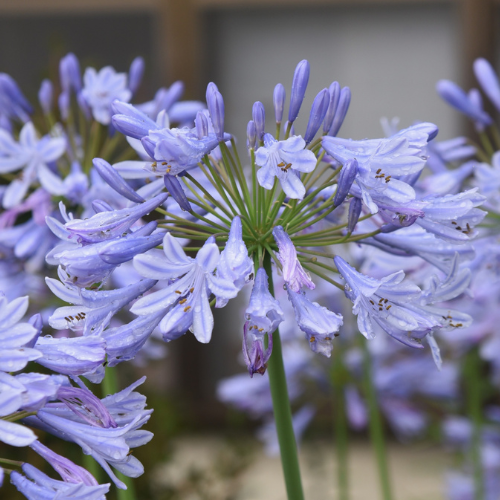
  • Agapanthus praecox subsp. orientalis 
    (lily of the Nile) (E) (I) – Note: all agapanthus attract bees
  • Agastache foeniculum 
    (anise hyssop) (E) (H)
  • Alstroemeria x hybrida 
    (Inca lily) (D)
  • Ammi majus 
    (Queen Ann’s lace) (E)
  • Asclepias tuberosa 
    (milkweed) (E)
  • Asparagus officinalis 
    (edible asparagus) (D)
  • Aster callistephus 
    (Chinese aster) (E)
  • Aster tradescantia 
    (Michaelmas daisy) (D)
  • Borago offcinalis 
    (borage) (E) (H)
  • Carpobrotus edulis 
    (Hottentot’s fig) (E) (I)
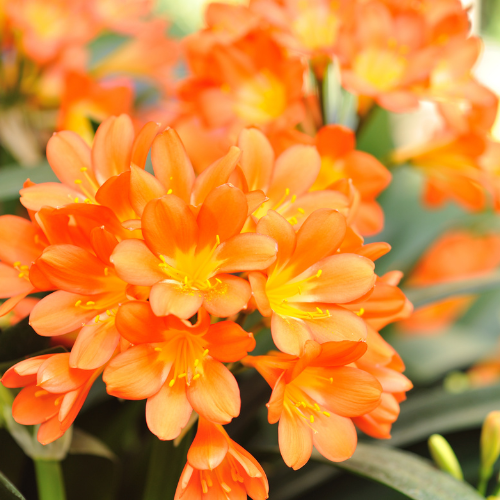
  • Clivia miniata 
    (bush lily) (E) (I)
  • Cynara scolymus 
    (globe artichoke) (E)
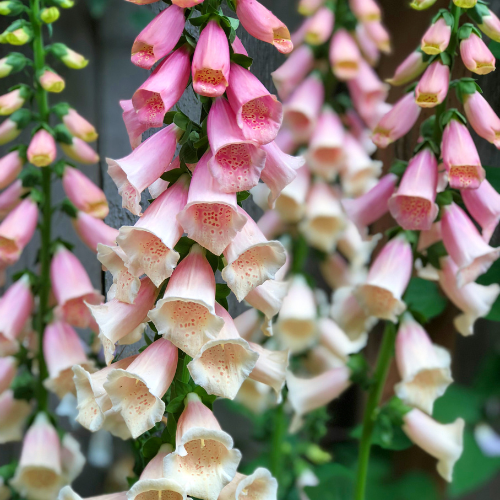
  • Digitalis purpurea 
    (foxglove) (E)
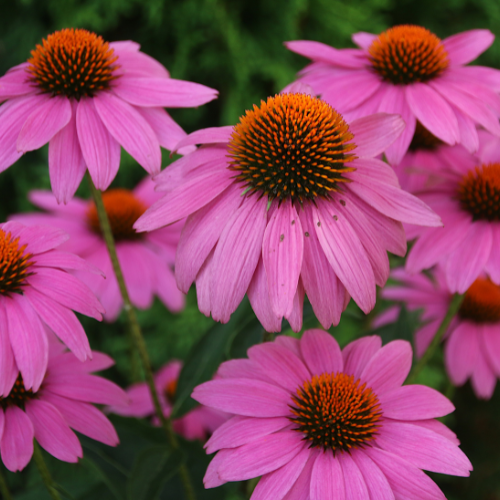
  • Ecinacea purpurea 
    (cone flower) (D)
  • Erigeron karvinskianus 
    (fleabane) (E)
  • Gaillardia x grandiflora 
    (blanket flower) (E)
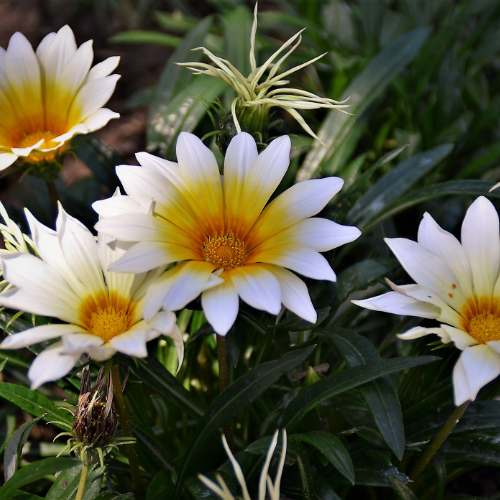
  • Gazania uniflora 
    (starflower) (E) (I) – Note: all Gazanias attract bees
  • Helianthus annuus 
    (sunflower) (E)
  • Kniphofia uvaria 
    (red hot poker) (D) (I) – Note: all Kniphofias attract bees
  • Lampranthus aureus 
    (orange vygie) (E) (I) – Note: most plants of the vygie family attract bees
  • Lavandula stoechas 
    (French lavender, Italian lavender, Spanish lavender) (E) – Note: all Lavandulas attract bees
  • Lobularia maritima 
    (sweet alyssum) (E)
  • Monarda didyma 
    (bee balm) (D)
  • Origanum vulgare 
    (oregano) (E) (H)
  • Osteospermum x hybrida 
    (African daisy) (E) (I)
  • Papaver nudicaule 
    (Iceland poppy) (E) – Note: all poppies attract bees
  • Penstemon x hybrida 
    (penstemon) (D)
  • Plectranthus neochilus 
    (lobster flower) (E) (I)
  • Portulcaa oleracea Hybrids 
    (purslane) (E)
  • Rosmarinus officinalis 
    (rosemary) (E)
  • Rudbeckia hirta 
    (coneflower) (D)
  • Salvia splendens 
    (scarlet sage) (E) – Note: all Salvias attract bees
  • Scabiosa columbaria 
    (pincushion flower) (E)
  • Sedum spectabile 
    (stonecrop) (D) – Note: all Sedums attract bees
  • Streptocarpus hybrids 
    (Cape primrose) (E)
  • Tropaeolum majus 
    (nasturtium) (E)
  • Thymus vulgaris 
    (common thyme) (E) (H) – Note: all Thymus attract bees
  • Verbena x hybrida 
    (verbena) (E)
  • Zantedeschia aethiopica 
    (white arum lily) (D) (I)

Shrubs & Climbers

(Medium to Tall Growing)

Key:  (B) = bulb (C) = climber (D) = deciduous (E) = evergreen (F) = fruit (H) = herb (I) = indigenous (N) = nectar rich (S) = seed (T) = thorns  


  • Aloe arborescens 
    (krantz aloe) (E) (I) – Note: all Aloes attract bees
  • Buddleja davidii 
    (butterfly bush) (D)
  • Buddleja salviifolia 
    (sagewood) (E) (I)
  • Callistemon citrinus Hybrids 
    (Australian bottlebrush) (E) – Note: all Callistemons attract bees
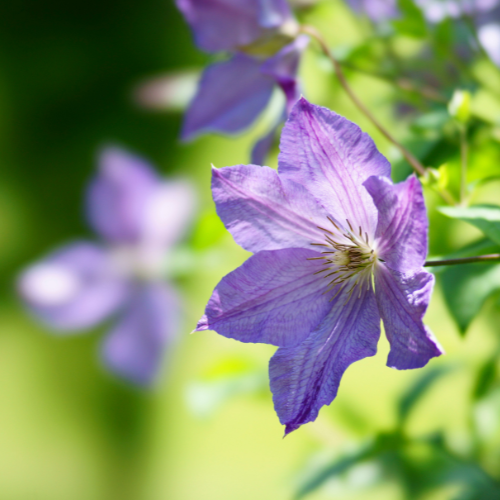
  • Clematis montana ‘Grandiflora’ 
    (clematis) (D) (C)
  • Crassula ovata 
    (jade plant) (E) (I)
  • Echium candicans 
    (pride of Madeira) (E)
  • Escallonia ‘Pink Princess’ 
    (Escallonia) (E)
  • Euryops virgineus 
    (honey daisy) (E) (I)
  • Feijoa sellowiana 
    (pineapple guava) (E) (F)
  • Hypoestes aristata 
    (ribbon bush) (E) (I)
  • Leonotis leonurus 
    (wild dagga) (E) (I)
  • Leptospermum scoparium Hybrids 
    (tea bush) (E)
  • Melaleuca armillaris 
    (honey myrtle) (E) – Note: all Melaleucas attract bees
  • Polygala myrtifolia 
    (September bush) (E) (I)
  • Portulacaria afra 
    (pork bush) (E) (I)
  • Rosa x hybrida 
    (rose) (D) – Note: all Roses attract bees
  • Salvia leucantha 
    (Mexican sage) – Note: all Salvias attract bees
  • Senecio tamoides 
    (canary creeper) (E) (I) (C)
  • Strelitzia reginae 
    (crane flower) (E) (I)
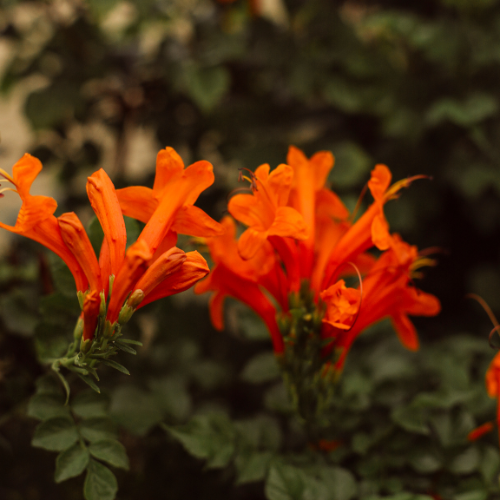
  • Tecoma capensis 
    (bush honeysuckle) (E) (I)
  • Trachelospermum jasminoides 
    (star jasmine) (E) (C)

Trees

(Tall Growing)

Key:  (B) = bulb (C) = climber (D) = deciduous (E) = evergreen (F) = fruit (H) = herb (I) = indigenous (N) = nectar rich (S) = seed (T) = thorns  


  • Brachylaena discolour 
    (coastal silver leaf) (E) (I)
  • Calpurnia aurea 
    (wild laburnum) (D) (I)
  • Carica papaya 
    (paw paw) (E) (F)
  • Citrus (E) (F) – Note: all citrus blossoms attract bees
  • Clerodendrum glabrum 
    (tinderwood) (E) (I)
  • Combretum krausii 
    (forest bush willow) (E) (I) – Note: all Combretums attract bees
  • Dichrostachys cinerea 
    (sickle bush) (D) (I)
  • Dombeya rotundifolia 
    (wild pear) (D) (I)
  • Erythrina lysitemon 
    (coral tree) (D) (I) – Note: all Erythrinas attract bees|
  • Halleria lucida 
    (wild tree fuchsia) (E) (I)
  • Magnolia grandiflora 
    (bull bay) (E) – Note: all Magnolias attract bees
  • Malus domesticum 
    (apple) (D) (F)
  • Nuxia floribunda 
    (forest elder) (E) (I)
  • Peltophorum africanum 
    (weeping wattle) (D) (I)
  • Prunus cerasifera 
    (plum) (D) (F)
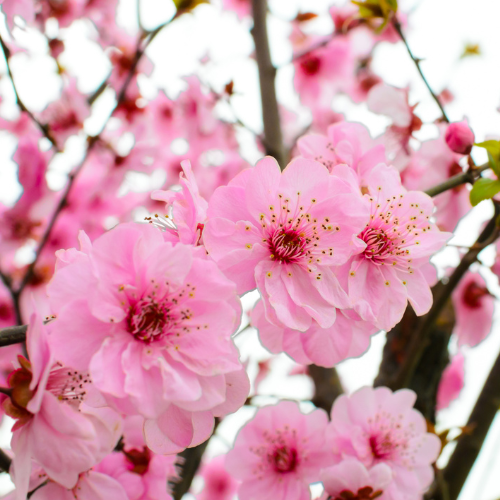
  • Prunus persica 
    (peach) (D) (F)
  • Rhamnus prinoides 
    (dogwood) (E) (I)
  • Salix caprea 
    (goat’s willow) (D) – Note: many Salix attract bees
  • Schotia brachypetala 
    (weeping Boer bean) (E) (I)
  • Searsia lancea 
    (karee) (E) (I) – Note: all Searsias attract bees
  • Syzygium cordatum 
    (water berry) (E) (I) – Note: all Syzygiums attract bees
  • Vachellia karoo 
    (sweet thorn) (D) (I) – Note: all Vachellias attract bees
  • Ziziphus mucronata 
    (buffalo thorn) (E) (I)

Disclaimer:

Whilst every care and caution has been taken in compiling these lists in terms of correctness and accuracy, Blackwood’s, nor any of their employees can be held liable or responsible if any of the recommendations are found to be incorrect in any way whatsoever. They are merely a guide to help gardeners and staff in finding solutions to gardening problems. All plants listed may not be available for sale at times. They do however all grow in the greater KwaZulu-Natal area and are to be found growing successfully in local gardens.