African Violet

African Violet

A classic indoor favourite with charming blooms and easy-care appeal

Thrives in Bright,
Indirect Light

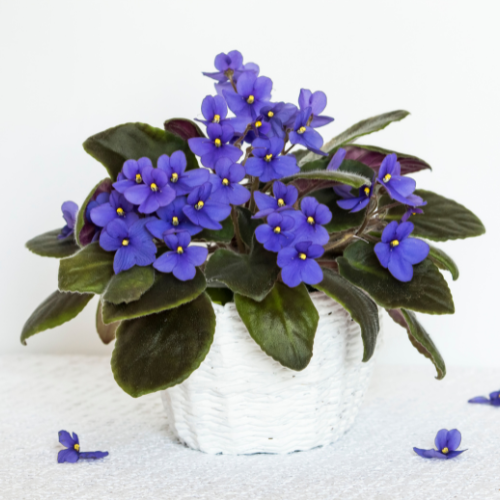
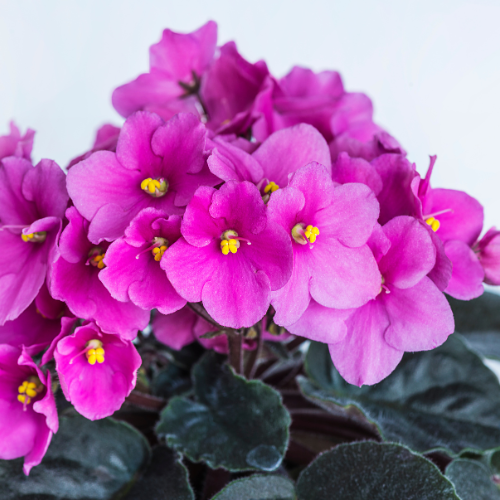
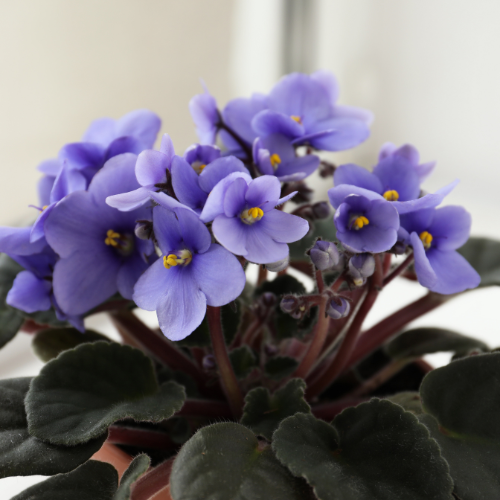
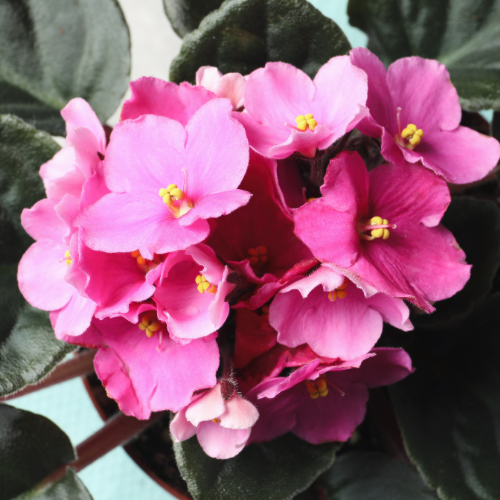
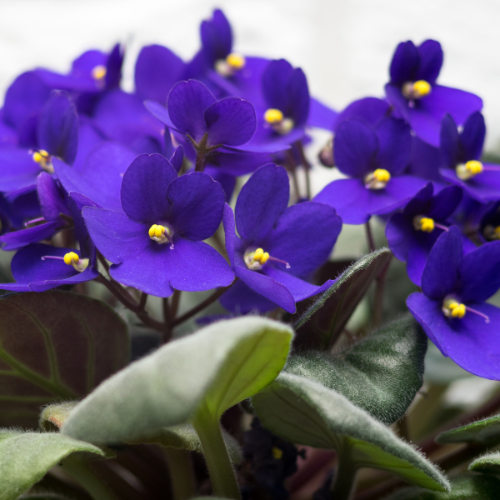
African Violets are charming and compact indoor plants prized for their delicate, velvety blooms and vibrant colours.

These plants are well-loved for their ability to thrive indoors and add a touch of cheerful elegance to any space.
GUIDANCE FOR SUCCESSFUL INDOOR GROWING

African Violet Growing & Care Guide

FAQ

Why are my African Violet leaves turning yellow?

Usually caused by overwatering or poor drainage.

Why is my African Violet not flowering?

Usually due to insufficient light.

Can African Violets grow outdoors?Can African Violets grow outdoors?

They are best grown indoors or in warm sheltered areas.

Where do African Violets grow best indoors?

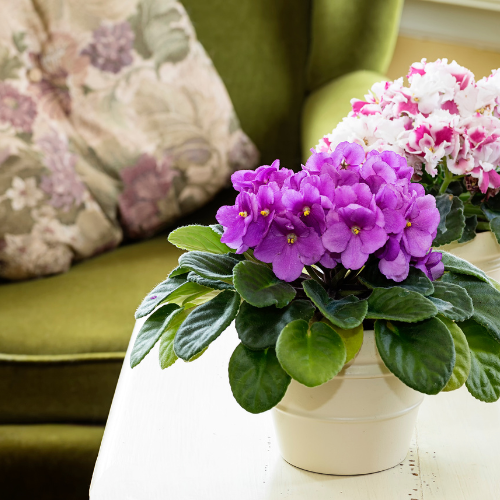
On bright windowsills (but not in direct sunlight), on office desks, kitchen counters and bathroom shelves if those rooms receive bright light.

Light

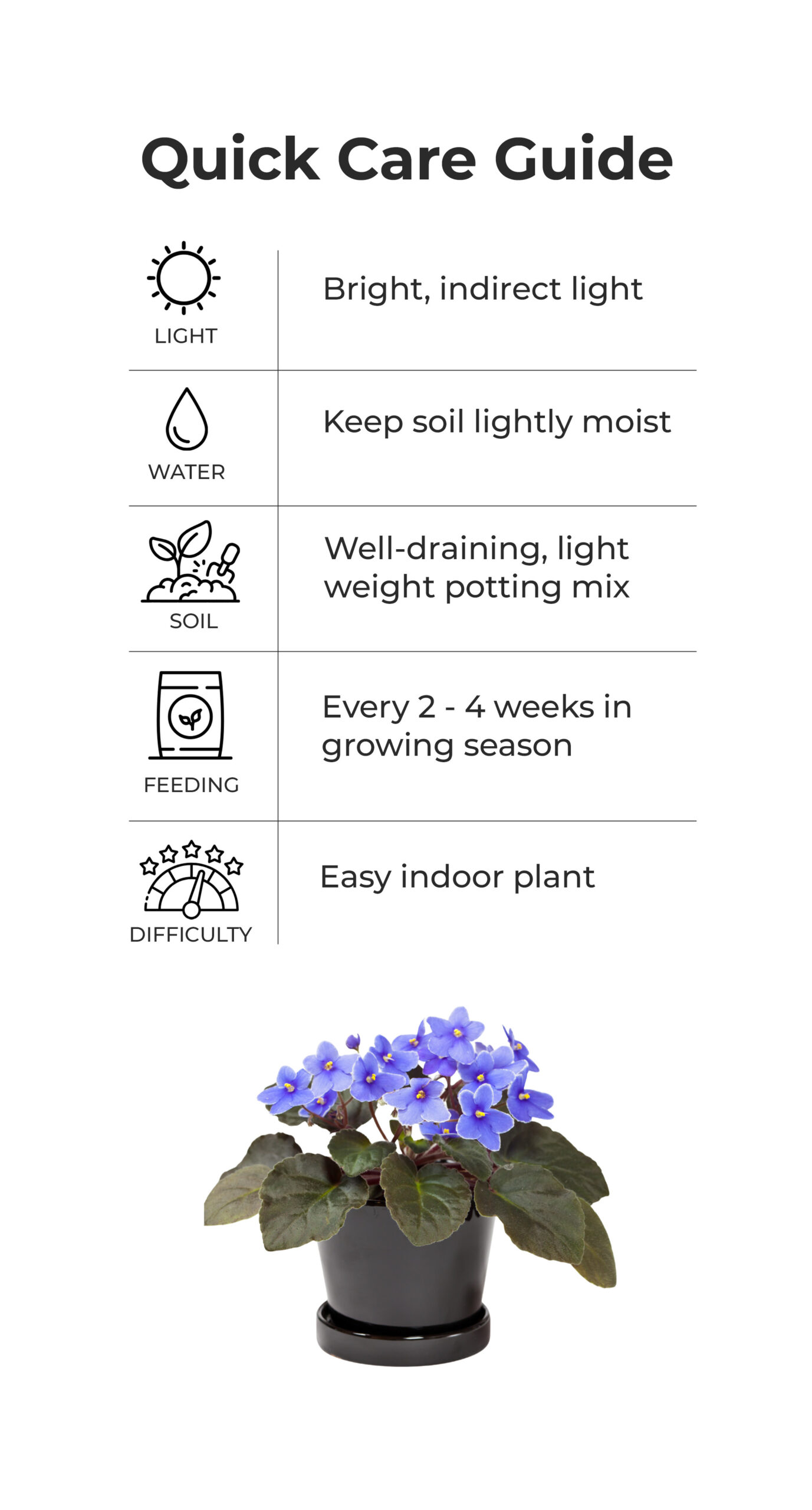
African Violets prefer bright, indirect light. Place them near a window where they can receive filtered sunlight. Avoid exposing them to direct sunlight, as it may scorch the leaves. Adequate light ensures prolific blooming and healthy growth.

WATER

Maintain soil moisture consistently for African Violets. Water the plant when the top centimetre or two of the soil feels dry to the touch. Use room-temperature water and avoid wetting the leaves to prevent water spots. To keep the leaves dry when watering, make sure to water directly onto the soil, or let the pot (which must have draining holes) sit in a saucer of water.

SOIL

African Violets thrive in well-draining, lightweight potting mixtures. Use a specialised African Violet mix or create one by combining peat moss (or coco coir), perlite, and vermiculite. Good drainage is essential to prevent root rot which is a common issue for these plants. (Root rot is when the plant stays wet for too long and the roots begin to rot).

FERTILISER

Feed African Violets with a balanced, water-soluble fertiliser designed for flowering plants. Apply the fertiliser every 2-4 weeks during the growing season (spring and summer) at half the recommended strength. 

REPOTTING

Consider repotting every 1-2 years or when the plant outgrows its container.

COMMON ISSUES

  • Overwatering: Avoid soggy soil, as African Violets are susceptible to root rot. Allow the top layer of soil to dry before watering again.
  • Leaf Spotting: Watering on the leaves can lead to water spots or fungal diseases. Water the soil directly to keep the leaves dry.

SPECIAL NOTES

African Violets are relatively low-maintenance and can bloom throughout the year under the right conditions. Regularly remove spent flowers and damaged leaves to encourage continuous blooming. 

 
DISCLAIMER:  (Note: The information provided in this article is based on general guidelines for cultivating African Violets. Individual plant care may vary, so always observe your plant’s specific needs and adjust your care accordingly.)
The information presented on this website is intended solely as a general guide. We neither endorse specific plant varieties over others nor claim expertise in stock performance. All information is believed to be accurate, based on private inquiries and experiences, and is provided in good faith. Blackwood’s, including its employees, disclaims any responsibility for harm, loss, cost, or damage arising from the use or reliance upon any information on this website, especially if any part of the information proves to be inaccurate or incomplete. Please note that the displayed photos are not representative of current stock but are used for illustrative purposes only.