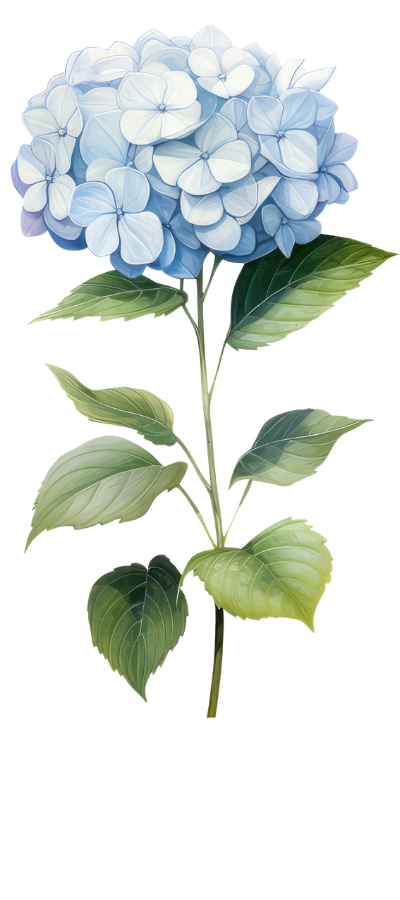
How to grow Hydrangeas

Growing Hydrangeas

Lush foliage and show-stopping blooms

Hydrangeas are loved for their large, luxurious flower heads and their ability to transform shaded spaces into cool, leafy retreats. Flowering from spring through summer, they bring long-lasting colour and structure to the garden, whether planted in beds or grown in containers.

With the right balance of light, water and soil, hydrangeas are surprisingly easy to grow and incredibly rewarding.
Get the 'Grow How'

Hydrangeas enjoy gentle light, rich soil and consistent moisture. Give them what they need, and they’ll reward you with generous, show-stopping blooms season after season.
Planting Procedure
Fertilising and Care
Pests and Diseases
Garden Uses

THE BASICS:

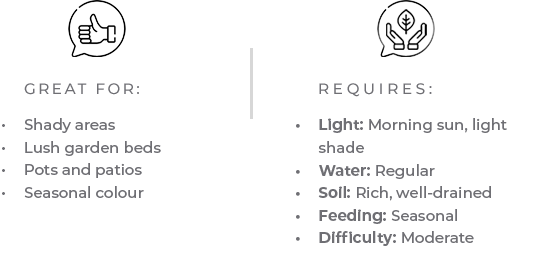
Good preparation leads to better flowering. Hydrangeas prefer fertile, moisture-retentive soil and protection from harsh afternoon sun.

Quick Tips:

Plant in morning sun with afternoon shade
  • Choose a sheltered spot protected from strong winds
  • Improve soil with compost or organic matter

  • Water the hydrangea plant well about an hour or so before you plant it. Dig a hole about 3 times as wide as the nursery container the hydrangea is growing in. This allows room for the roots to spread and establish properly.  Never plant a hydrangea in a hole that is deeper than its original pot or nursery bag.  When you’re planting more than one hydrangea, plant them at least 60cm apart to allow for enough space in maturity.
  • Hydrangeas thrive in moist soil, so if your soil is light, enrich it with moisture-retaining organic matter like well-rotted manure or compost before planting.
  • Carefully remove the plant from its nursery container. Place the root ball in the hole, ensuring the top of the root ball is level with the surrounding ground. Fill in around the plant with the prepared soil mixture, pressing it down gently but firmly to avoid air pockets.
  • After planting, water the hydrangea thoroughly to help settle the soil around the roots. Keep the soil consistently moist during the establishment period, particularly in hot or dry weather.

KEEP THEM HAPPY:

Hydrangeas appreciate regular care.  Consistent watering and appropriate feeding are key to healthy growth and abundant blooms.

Quick Tips:
  • Water regularly, especially during warm weather
  • Feed during the growing season with a balanced fertiliser
  • Mulch well to retain moisture and keep roots cool

  • Apply a thick layer of mulch around the base of the plant, keeping it a few centimetres away from the stems. Mulch helps to retain soil moisture, keeps the roots cool and suppresses weeds.
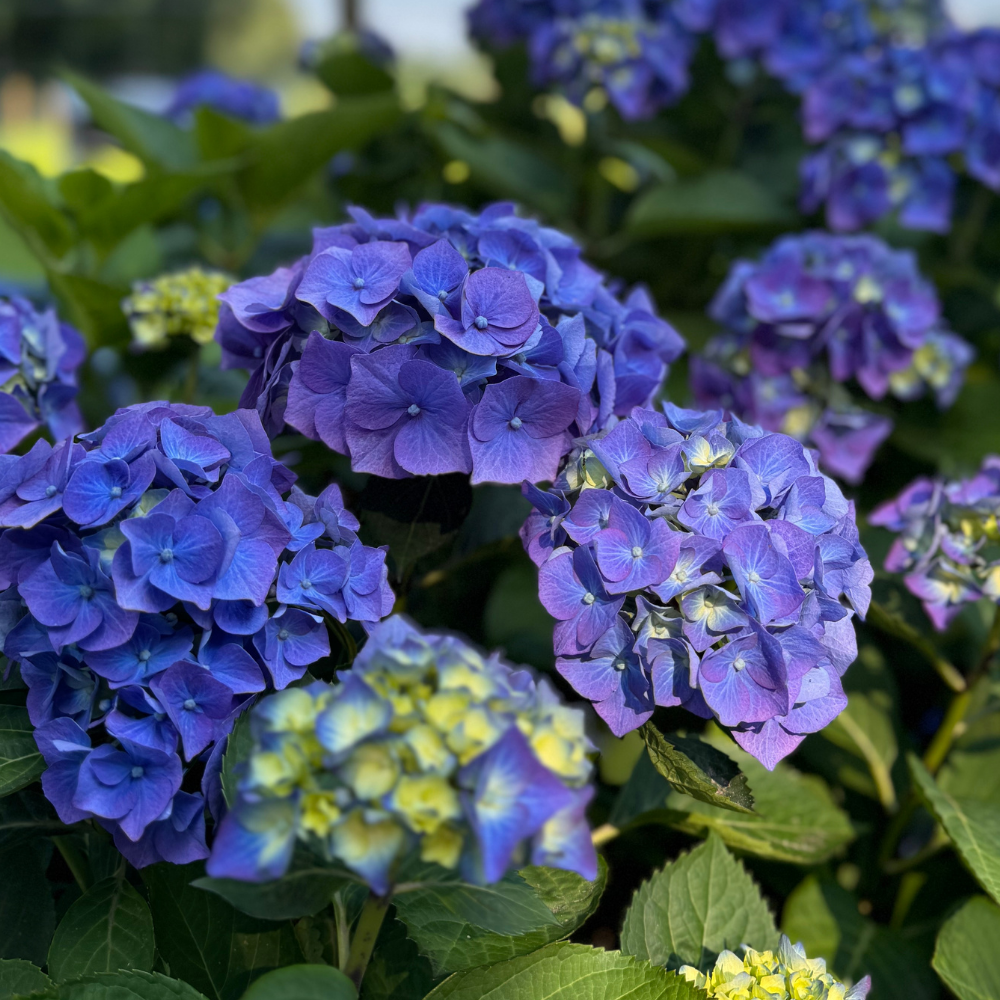
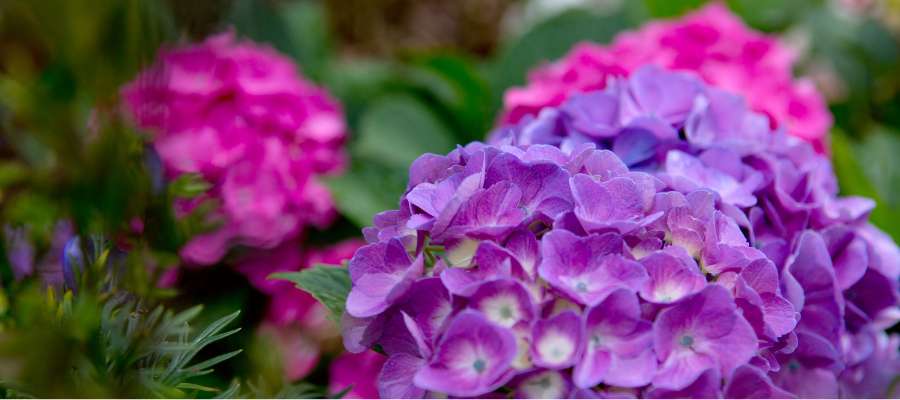
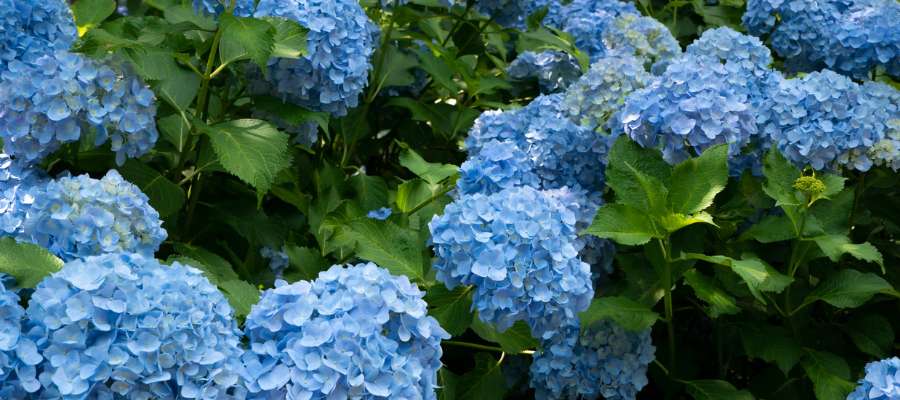
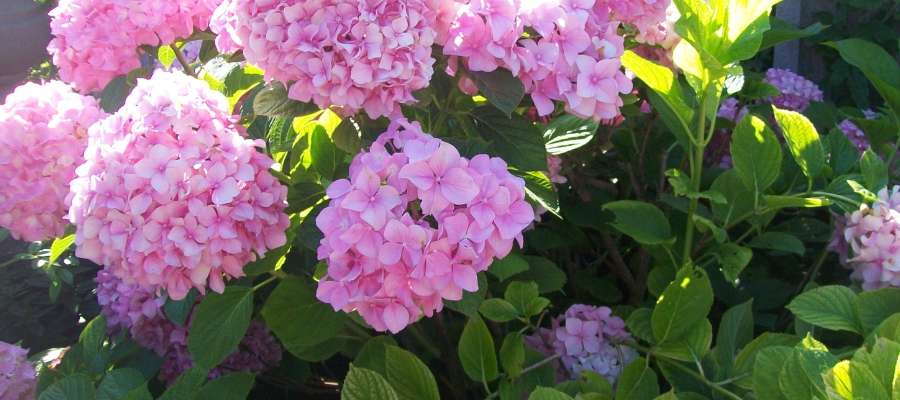
  • Hydrangeas benefit from regular feeding with a balanced granular fertiliser. Use a slow release fertiliser every 6 to 8 weeks during the growing season. For varieties that change colour based on soil pH, you can amend the soil to encourage pink (alkaline) or blue (acidic) flowers.
  • Pruning should be done after flowering, removing old and dead wood to encourage new growth. For most varieties, avoid heavy pruning, as hydrangeas often flower on old wood.
  • Hydrangeas need regular watering, especially in dry periods. Ensure that the soil remains moist but not waterlogged. Morning watering is best, allowing foliage to dry before evening.


GOOD TO KNOW:

Most problems are preventable with good care.  Stress from poor watering or exposure is the most common cause of hydrangea issues.

Quick Tips:
  • Ensure good airflow around plants
  • Avoid wetting leaves late in the day
  • Remove damaged or diseased growth promptly

  • Aphids gather on the soft new growth tips and suck the sap out of the plant – control with a general insecticide or aphicide.
  • Red spider mites are a problem on some plants in summer – use a suitable miticide.
  • Iron deficiency is identified by yellow leaves, while the veins remain prominently green – correct with a drench of iron chelate.
  • Hydrangeas are prone to diseases like rust, powdery mildew, and leaf spot – especially when grown in areas with high humidity. Treat with a suitable fungicide at the first sign of infection.
  • Slugs and snails – These pests can damage hydrangea leaves and flowers, especially in wet weather. Use organic snail bait or other control methods to protect the plants.


GREAT FOR:

Hydrangeas add elegance and softness to the garden.  They work beautifully as features or as part of layered planting schemes.

Quick Tips:

Use aloes as:
  • Perfect for shaded and semi-shaded gardens
  • Combine with azaleas, camellias and ferns
  • Excellent for creating a lush, cottage-style feel

  • Hydrangeas make excellent specimen plants, drawing attention with their lush blooms.
  • They are ideal for mass planting in borders or as foundation plants in a mixed shrub garden.
  • They work well in large containers, brightening up patios or entrances.
  • Perfect for shady areas, adding colour and texture where other flowering plants may struggle.


Shopping List

  1. Spade and garden fork for digging planting holes
  2. High-quality potting soil or compost for soil enrichment
  3. Watering can or hose for consistent watering
  4. Balanced fertiliser (preferably with a 3:1:5)
  5. Mulch material to retain moisture and protect roots
  6. Pots with good drainage if planting in containers

DISCLAIMER: 
 The information presented on this website is intended solely as a general guide. We neither endorse specific plant varieties over others nor claim expertise in stock performance. All information is believed to be accurate, based on private inquiries and experiences, and is provided in good faith. Blackwood’s, including its employees, disclaims any responsibility for harm, loss, cost, or damage arising from the use or reliance upon any information on this website, especially if any part of the information proves to be inaccurate or incomplete. Please note that the displayed photos are not representative of current stock but are used for illustrative purposes only.