Plants with Fragrant Flowers

PLANTING SOLUTIONS

Plants with Fragrant Flowers

Fragrant flowers have been revered through the ages. Many plants have been cultivated for their fragrance alone and planted in holy places for thousands of years. There is no doubt that sweetly scented flowers lend a special atmosphere to the garden and the home. Select from this list of highly fragrant plants to add a special romantic element to your outdoor living areas. There are many indigenous plants with deliciously scented blooms. Remember to grow fragrant plants in close proximity to the home for optimum benefits to the olfactory senses.


Below are just a few of the more common garden plants that can be grown for this purpose in KwaZulu-Natal.  Their botanical name is listed first with common names in (brackets).

Annuals and Perennials

(Low Growing)

Key:  (B) = bulb (C) = climber (D) = deciduous (E) = evergreen (F) = fruit (H) = herb (I) = indigenous (N) = nectar rich (S) = seed (T) = thorns  


  • Antirrhinum majus 
    (snapdragon) (E) (A)
  • Cyclamen persicum 
    (cyclamen)
  • Dianthus barbatus Hybrids 
    (sweet william) (E) (A)
  • Dianthus caryophyllus 
    (carnation) (E) (A)
  • Freesia hybrids (freesia) (B)
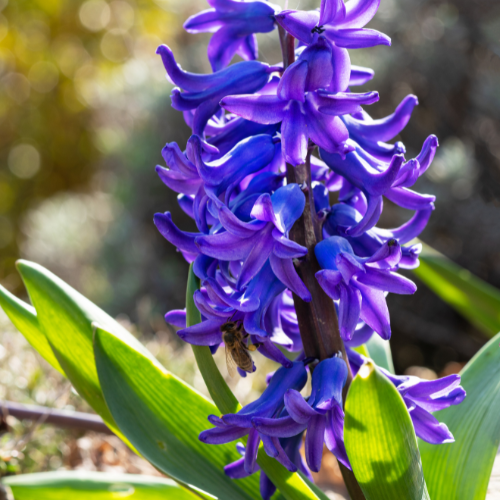
  • Hyacinthus orientalis
    (hyacinth) (D) (B)
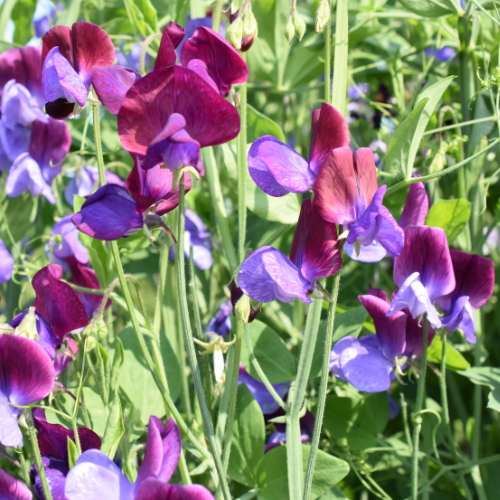
  • Lathyrus odoratus 
    (sweet pea) (E) (A)
  • Lilium Hybrids 
    (lily) (D) (B)
  • Lobularia maritima 
    (sweet alyssum) (E) (A)
  • Malcolmia maritima 
    (Virginian stocks) (E) (A)
  • Matthiola incana 
    (stocks) (E) (A)
  • Muscari armeniacum 
    (grape hyacinth) (D) (B)
  • Narcissus Hybrids 
    (daffodil) (D) (B)
  • Phlox paniculata Hybrids 
    (perennial phlox) (D)
  • Primula acaulis 
    (primrose) (E) (A)
  • Tulbaghia fragrans 
    (wild garlic) (D) (I) (B)
  • Viola cornuta 
    (hearts ease) (E) (A)
  • Viola odorata ‘The Czar’ 
    (sweet violet) (D)
  • Viola wittrockiana 
    (pansy) (E) (A)

Shrubs & Climbers

(Medium to Tall Growing)

Key:  (B) = bulb (C) = climber (D) = deciduous (E) = evergreen (F) = fruit (H) = herb (I) = indigenous (N) = nectar rich (S) = seed (T) = thorns  


  • Abelia x grandiflora 
    (glossy abelia) (E)
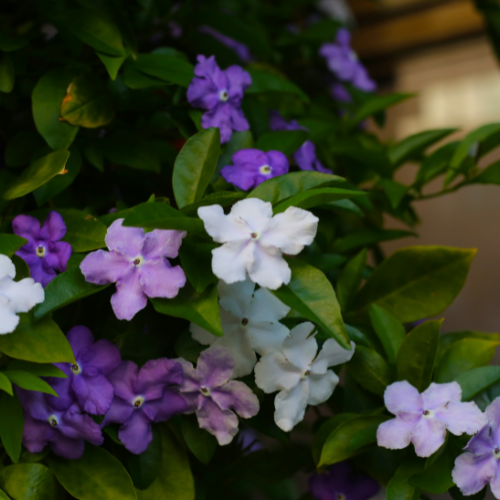
  • Brunfelsia pauciflora floribunda 
    (yesterday today tomorrow) (D)
  • Brunfelsia undulata 
    (white yesterday today tomorrow) (E)
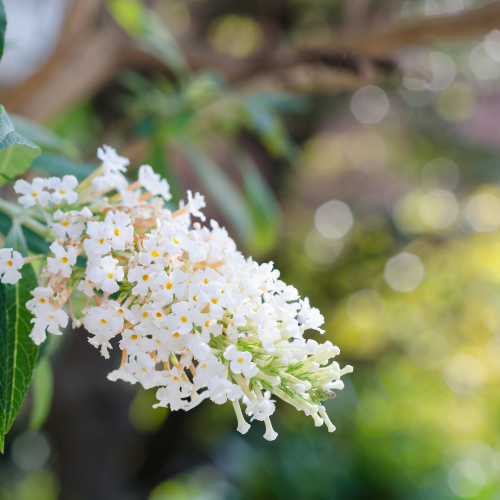
  • Buddleja asiatica 
    (butterfly bush) (E)
  • Buddleja auriculata 
    (weeping sage) (E) (I)
  • Buddleja davidii hybrids 
    (butterfly bush) (E)
  • Buddleja salviifolia 
    (sagewood) (E) (I)
  • Camellia sasanqua Hybrids 
    (autumn flowering camellia) (E)
  • Choisya ternata 
    (Mexican orange) (E)
  • Citrofortunella microcarpa 
    (calamondin) (E) (F)
  • Deutzia gracilis 
    (bridal wreath) (D)
  • Dracaena aletriformis 
    (large leaved dragon tree) (E) (I)
  • Dracaena fragrans 
    (dragon tree) (E)
  • Ehretia rigida 
    (puzzle bush) (D) (I)
  • Elaeagnus ebbingei‘Gilt Edge’ 
    (Russian silver olive) (E)
  • Fortunella japonica 
    (kumquat) (E) (F)
  • Freylinia lanceolata 
    (honeybells) (E) (I)
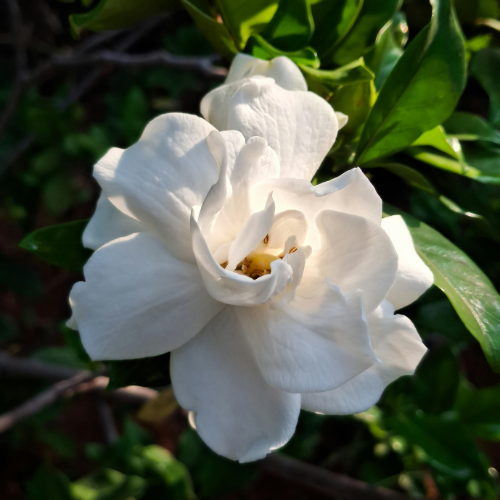
  • Gardenia augusta hybrids 
    (Cape jasmine) (E)
  • Gardenia thunbergia 
    (white gardenia) (E) (I)
  • Gelsemium sempervirens 
    (Carolina jessamine) (E) (C)
  • Heliotropium peruvianum 
    (heliotrope) (E)
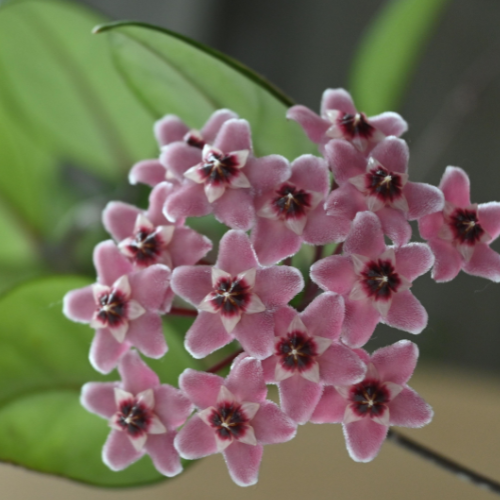
  • Hoya carnosa 
    (wax flower) (E) (C)
  • Jasminum angulare 
    (wild jasmine) (E) (I)
  • Jasminum multipartitum 
    (starry wild jasmine) (E) (C) (I)
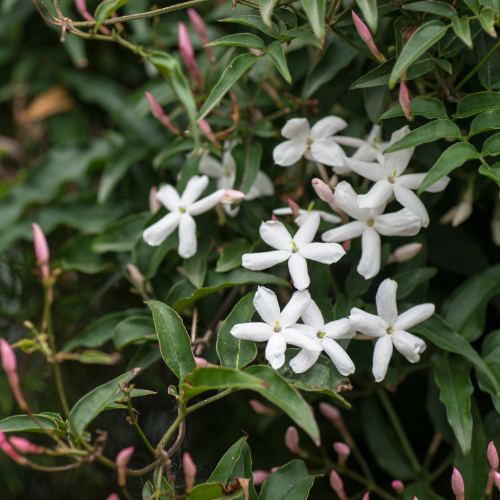
  • Jasminum officinale 
    (true jasmine) (E) (C)
  • Jasminum polyanthum 
    (Chinese jasmine) (E) (C)
  • Jasminum sambac 
    (bush jasmine) (E)
  • Ligustrum ovalifolium ‘Aureum’ 
    (golden privet) (E)
  • Lonicera gigantea ‘Superba’ 
    (bush honeysuckle) (D)
  • Magnolia soulangeana 
    (tulip magnolia) (D)
  • Ochna serrulata 
    (mickey mouse bush) (E) (I)
  • Osmanthus fragrans 
    (sweet olive) (E)
  • Pavetta lanceolata 
    (weeping bride’s bush) (E) (I)
  • Rhododendron hybrids
    (azalea) (D) (E)
  • Rosa hybrida 
    (rose bushes and climbers) (D)
  • Rothmannia fischeri 
    (scented bells) (E) (I)
  • Rothmannia globosa 
    (September bells) (E) (I)
  • Stephanotis floribunda 
    (Madagascar jasmine) (E) (C)
  • Tarenna pavettoides 
    (false bride’s bush) (E) (I)
  • Trachelospermum jasminoides 
    (star jasmine) (E) (C)
  • Vernonia colorata 
    (Lowveld bitter tea) (E) (I)
  • Viburnum odoratissimum 
    (evegreen viburnum) (E)
  • Viburnum opulus‘Rosea’ 
    (Japanese snowball) (D)
  • Wisteria sinensis Hybrids 
    (blue rain) (D) (C)
  • Xylotheca kraussiana 
    (African dog-rose) (E) (I)

Trees

(Tall Growing)

Key:  (B) = bulb (C) = climber (D) = deciduous (E) = evergreen (F) = fruit (H) = herb (I) = indigenous (N) = nectar rich (S) = seed (T) = thorns  


  • Apodytes dimidiata 
    (white pear) (E) (I)
  • Buddleja saligna 
    (false olive) (E) (I)
  • Citrus limon 
    (lemon) (E) (F) – Note: all citrus types have fragrant flowers
  • Dombeya rotundifolia 
    (common wild pear) (D) (I)
  • Heteropyxis natalensis 
    (lavender tree) (D) (I)
  • Hymenosporum flavum (scrambled egg tree) (E)
  • Ilex mitis 
    (Cape holly) (E) (I)
  • Magnolia grandiflora 
    (bull bay) (E)
  • Michelia figo 
    (port wine magnolia) (E)
  • Nuxia floribunda 
    (forest elder) (E) (I)
  • Plumeria rubra 
    (frangipani) (D)
  • Tabernaemontana elegans 
    (toad tree) (E) (I)
  • Turraea floribunda 
    (wild honeysuckle tree) (D) (I)
  • Vachellia (Acaciakaroo 
    (sweet thorn) (D) (I)
  • Vocanga thouarsii 
    (wild frangipani) (E) (I)

Disclaimer:

Whilst every care and caution has been taken in compiling these lists in terms of correctness and accuracy, Blackwood’s, nor any of their employees can be held liable or responsible if any of the recommendations are found to be incorrect in any way whatsoever. They are merely a guide to help gardeners and staff in finding solutions to gardening problems. All plants listed may not be available for sale at times. They do however all grow in the greater KwaZulu-Natal area and are to be found growing successfully in local gardens.