Plants for Hot, Dry Gardens

PLANTING SOLUTIONS

Plants for Hot, Dry Gardens

Water efficient or drought resistant plants are the significant plants in areas with low rainfall. They also become sought after plants for general gardens when climatic conditions with lower rainfall prevail. As water becomes scarce and costly, these tough, enduring plants will no doubt become more significant in every garden.


Many of the listed plants below are indigenous. All of these plants are suitable for growing in KwaZulu-Natal gardens. Some are cold-hardy, whilst others require more sub-tropical climatic conditions.  Their botanical name is listed first with common names in (brackets).

Annuals and Perennials

(Low Growing)

Key:  (B) = bulb (C) = climber (D) = deciduous (E) = evergreen (F) = fruit (H) = herb (I) = indigenous (N) = nectar rich (S) = seed (T) = thorns  


  • Aeonium arborerum
    (velvet rose) (E)
  • Aloe chabaudii and many other aloe species
    (grey aloe) (E) (I)
  • Aloe ‘Peri Peri’ and many other aloe hybrids
    (clump forming aloe) – Note: there are many different aloes suitable for dry gardens
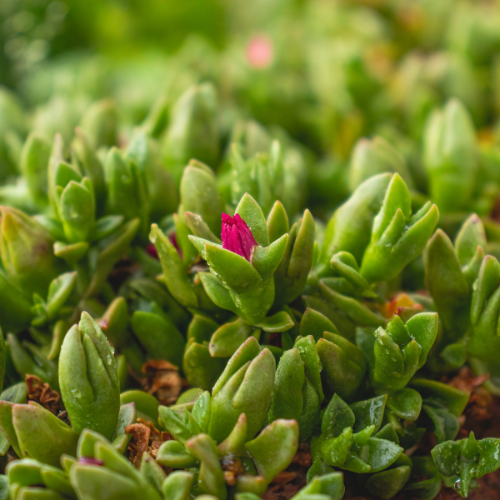
  • Aptenia cordiflolia
    (baby sun rose) (E) (I)
  • Barleria repens
    (dwarf bush violet) (E) (I)
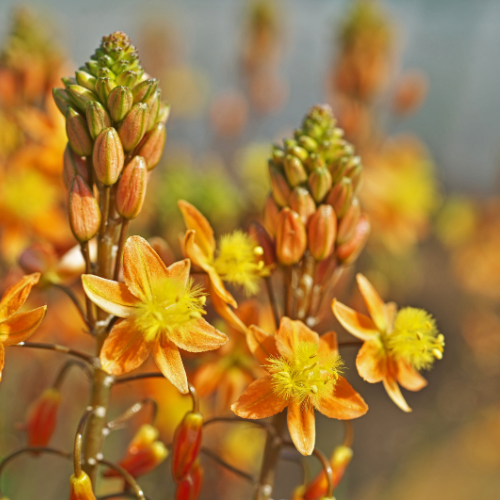
  • Bulbine frutescens
    (burn jelly plant) (E) (I)
  • Bulbine natalensis
    (Natal bulbine) (E) (I)
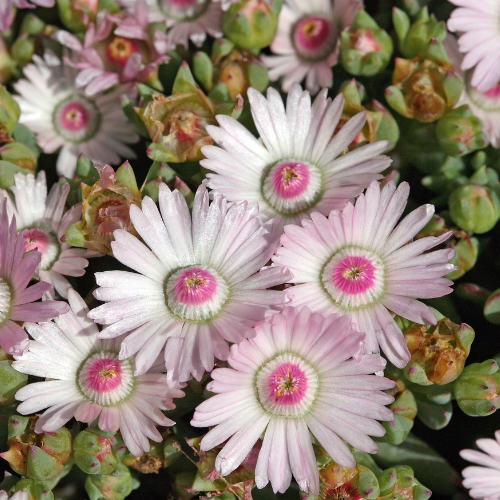
  • Carpobrotus acinaciformis
    (purple sour fig) (E) (I) – Note: all carpobrotus are good for dry gardens
  • Catharanthus roseus
    (vinca) (E)
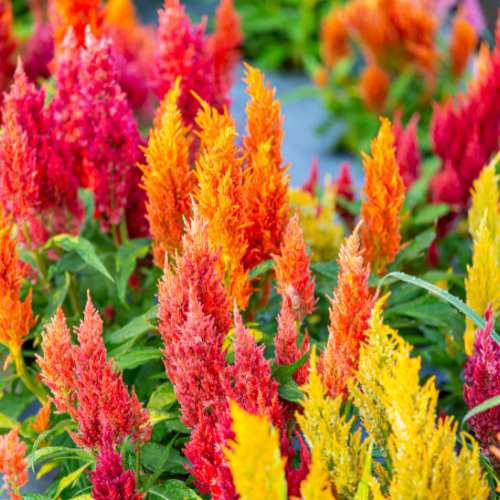
  • Celosia plumosa
    (cock’s comb) (E)
  • Cotyledon orbiculata
    (pig’s ears) (E) (I)
  • Crassula capitella
    (campfire crassula) (E) (I) – Note: there are a large number of different crasssulas that are ideal for dry gardens
  • Crassula multicava
    (fairy crassula) (E) (I)
  • Echeveria elegans
    (rock rose) (E) – Note: there are numerous echeverias or rock roses for dry gardens
  • Echinocactus grusonii
    (golden barrel cactus) (E) (T) – Note: there are numerous different types of cactus for dry gardens
  • Escholtzia californica
    (Californian poppy) (E)
  • Euphorbia hypericifolia hybrids (ED) – Note: many different Euphorbias thrive in dry gardens
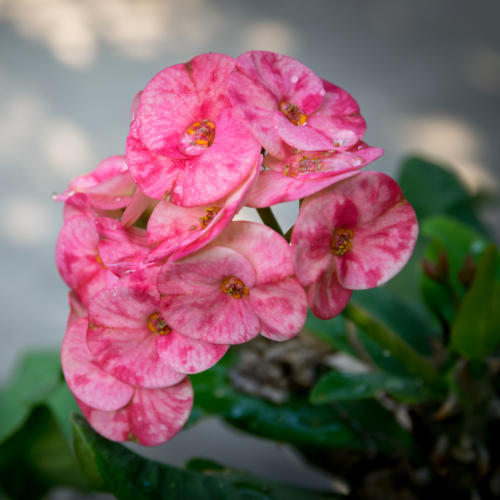
  • Euphorbia milii
    (Christ thorn) (D)
  • Gazania uniflora
    (star flower) (E) (I)
  • Gazania x hybrida
    (star flowers) (E) (I)
  • Gloriosa superba
    (flame lily) (D) (I) (B)
  • Graptopetalum paraguayense
    (mother of pearl) (E) – Note: there are numerous graptopetalums and close relatives for dry gardens
  • Kalanchoe pumila
    (mauve flowered kalanchoe) (E) – Note: there are numerous kalanchoes for dry gardens
  • Kalanchoe sexangularis
    (red leaf kalanchoe) (E) (I)
  • Kalanchoe thyrsiflora
    (paddle plant) (E) (I)
  • Kleinia fulgens
    (coral senecio) (E) (I)
  • Lampranthus aureus
    (orange garden vygie) (E) (I) – Note: there are many Lampranthus or vygies for dry gardens
  • Oscularia deltoides
    (sandstone vygie) (E) (I)
  • Osteospermum x hybrida
    (African daisy) (E) (I)
  • Othonna capensis
    (little prickles) (E) (I)
  • Pelargonium x hybrida
    (geranium) (E) (I)
  • Plectranthus neochilus ‘Variegata’
    (lobster flower) (E) (I)
  • Portulaca oleracea
    (purslane) (E)
  • Porulacaria afra ‘Nana’
    (dwarf pork bush) (E) (I)
  • Ruschia lineolata
    (mountain vygie) (E) (I)
  • Sansevieria hahnii and hybrids
    (snakeskin plant) (E)
  • Sansevieria trifasciata and hybrids
    (mother-in-laws tongue) (E) (I)
  • Sedum rupestre ‘Angelina’
    (stonecrop) (E) Note: there are numerous sedums for dry gardens
  • Sedum reflexum
    (Jenny’s stonecrop) (E)
  • Senecio cylindricus
    (grey senecio) (E) (I)
  • Verbena x hybrid
    (verbena) (E)

Shrubs & Climbers

(Medium to Tall Growing)

Key:  (B) = bulb (C) = climber (D) = deciduous (E) = evergreen (F) = fruit (H) = herb (I) = indigenous (N) = nectar rich (S) = seed (T) = thorns  


  • Adenium multiflorum 
    (impala lily) (D) (I)
  • Agave attenuata 
    (swan’s neck) (E) – Note: most Agaves are good for dry garden
  • Agave angustifolia ‘Variegata’ 
    (century plant) (E)
  • Agave potatorum 
    (butterfly agave) (E)
  • Aloe arborescens 
    (krantz aloe) (E) (I) (T) Note: most Aloes are suitable for dry gardens
  • Aloe ferox 
    (bitter aloe) (E) (I) (T)
  • Aloe rupestris 
    (bottlebrush aloe) (E) (I)
  • Aloiampelos tenuior var tenuior 
    (climbing aloe) (E) (I) (C)
  • Barleria albostellata 
    (grey barleria) (E) (I)
  • Beschorneria bracteata 
    (green flowered beschorneria) (E)
  • Crassula arborescens 
    (silver jade plant) (E) (I)
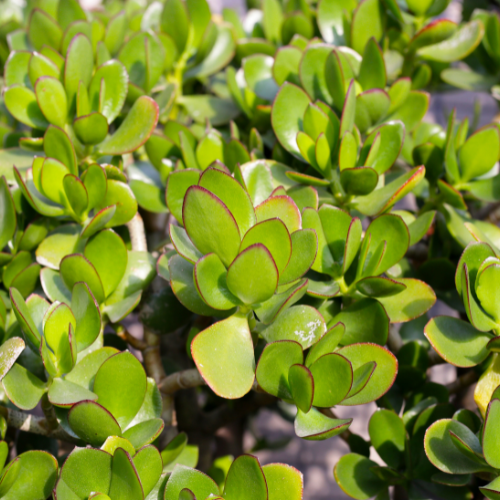
  • Crassula ovata 
    (dollar plant) (E) (I)
  • Ehretia rigida 
    (puzzle bush) (ED) (I)
  • Erythrina humeana 
    (dwarf coral tree) (D) (I)
  • Euphorbia grandicornis 
    (cow horn) (E) (I) (T) – Note: there are many Euphorbias for dry gardens
  • Euphorbia pulcherrima 
    (poinsettia) (D)
  • Euphorbia tirucalli ‘Sticks of Fire’ 
    (Indian tree spurge) (E) (I)
  • Euphorbia trigona 
    (African milk tree) (E) (I) (T)
  • Furcraea foetida var mediopicta 
    (variegated Mauritius hemp) (E)
  • Gardenia thunbergia 
    (white gardenia) (D) (I)
  • Jatropha integerrima 
    (spicy jatropha) (D)
  • Jatropha podagrica 
    (bottle plant) (D)
  • Oncoba spinosa 
    (snuff box tree) (E) (I)
  • Pachypodium lamerei 
    (Madagascar bottle tree) (D) (T)
  • Pachypodium saundersiae 
    (bottle tree) (D) (I) (T)
  • Pedilanthus tithymaloides 
    (zig zag plant) (D)
  • Portulacaria afra 
    (pork bush) (E) (I)
  • Sedum prealtum 
    (shrubby sedum) (E)
  • Senecio macroglossus 
    (wax vine) (E) (I) (C)
  • Strelitzia juncea 
    (narrow leaf bird of paradise) (E) (I)
  • Strelitzia reginae 
    (crane flower) (E) (I)
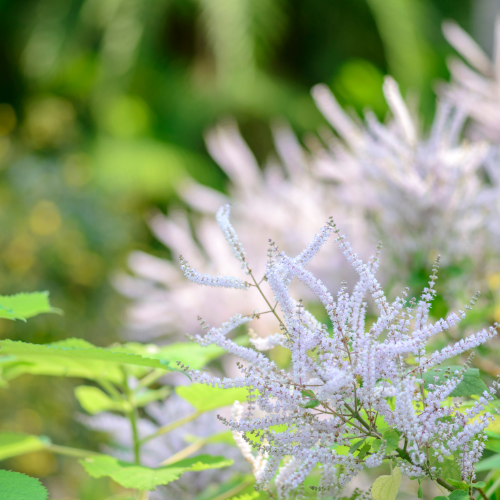
  • Tetradenia riparia 
    (misty plume bush) (D) (I)
  • Vernonia colorata 
    (Lowveld bitter-tea) (D) (I)

Trees

(Tall Growing)

Key:  (B) = bulb (C) = climber (D) = deciduous (E) = evergreen (F) = fruit (H) = herb (I) = indigenous (N) = nectar rich (S) = seed (T) = thorns  


  • Aloidendron barberae 
    (tree aloe) (E) (I) (T)
  • Beaucarnea recurvata 
    (ponytail palm) (E)
  • Bolusanthus speciosus 
    (tree wisteria) (D) (I)
  • Commiphora harveyi 
    (red stem corkwood) (D (I)
  • Dombeya rotundifolia 
    (wild pear) (D) (I)
  • Dovyalis caffra 
    (Kei apple) (D) (I) (T) (F)
  • Dracaena draco 
    (dragon tree) (E)
  • Erythrina caffra 
    (coast coral tree) (D) (I) (T)
  • Erythrina latissima 
    (broad leaf coral tree) (D) (I) (T)
  • Erythrina lysistemon 
    (common coral tree) (D) (I) (T)
  • Ochna natalita 
    (mickey mouse bush, Natal plane) (ED) (I)
  • Olea europaea subsp africana 
    (wild olive) (E) (I)
  • Palm: Bismarckia nobilis 
    (Bismarck’s palm) (E)
  • Palm: Phoenix canariensis 
    (Canary Island date palm) (E)
  • Palm: Washingtonia filifera 
    (desert fan palm) (E)
  • Peltophorum africanum 
    (weeping wattle, huilboom) (D) (I)
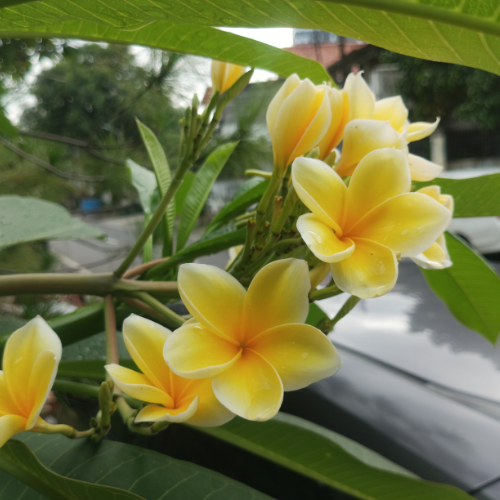
  • Plumeria rubra 
    (frangipani) (D)
  • Schotia brachypetala 
    (weeping Boer bean) (E) (I)
  • Senegalia galpinii 
    (monkey thorn) (D) (I) (T) – Note: all Senegalias are good for dry gardens
  • Spirostachys africana 
    (tamboti) (D) (I)
  • Vachellia karoo 
    (sweet thorn) (D) (I) (T) – Note: all Vachellias are good for dry gardens
  • Vachellia nilotica 
    (scented thorn) (D) (I) (T)
  • Yucca elephantipes 
    (palm lily) (E)
  • Ziziphus mucronata 
    (buffalo thorn) (ED) (I) (T)

Disclaimer:

Whilst every care and caution has been taken in compiling these lists in terms of correctness and accuracy, Blackwood’s, nor any of their employees can be held liable or responsible if any of the recommendations are found to be incorrect in any way whatsoever. They are merely a guide to help gardeners and staff in finding solutions to gardening problems. All plants listed may not be available for sale at times. They do however all grow in the greater KwaZulu-Natal area and are to be found growing successfully in local gardens.